





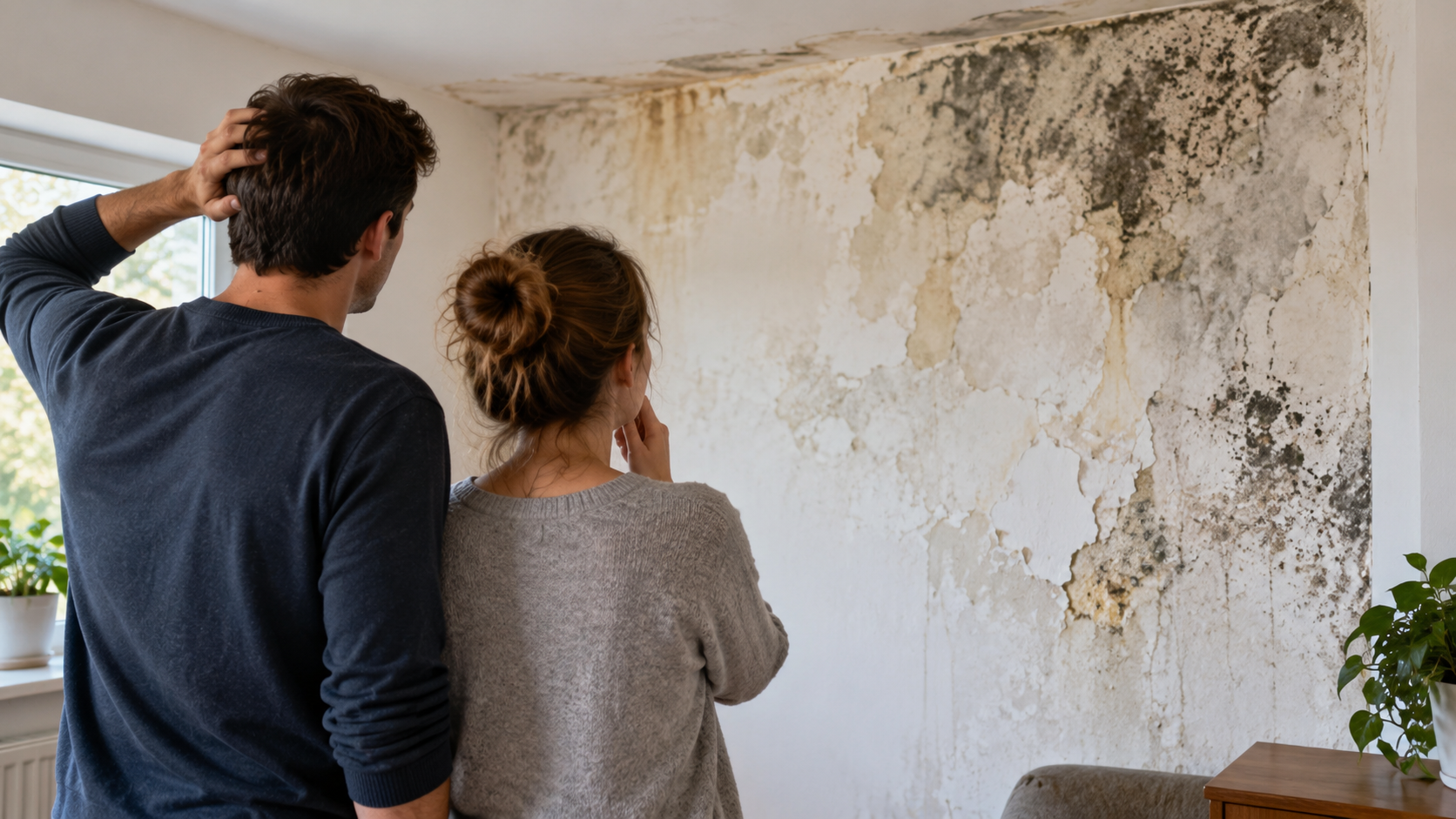
Mold in a Texas Home: What Buyers & Sellers Need to Know
A ceiling stain shows up. An inspector notices old water damage. Someone spots something suspicious behind a cabinet.
And suddenly the entire conversation becomes:
Is that mold? Who fixes it? Does the seller have to disclose it? Will insurance cover it?
Texas has specific rules around mold assessment and remediation, so this is one area where everyone needs to stay in their lane.
Hoyden Homes is a real estate brokerage. We are not mold assessors, remediators, environmental consultants, attorneys, insurance adjusters or medical professionals. We can help manage the real estate transaction and get the right professionals involved, but we don't diagnose mold, determine whether a property is safe, interpret testing or prescribe remediation.
With that said, there are a few things every Texas buyer and seller should understand.
Mold Usually Starts With a Moisture Problem
Before worrying about what kind of mold something might be, the bigger question is often:
Where is the moisture coming from?
It could be a plumbing leak, roof leak, HVAC condensation, an overflowing appliance, drainage issue, flooding or water intrusion that went unnoticed.
Texas regulators note that mold spores can begin growing on building materials when those materials remain wet or damp, and that controlling the moisture source is key to preventing continued growth.
That moisture source also becomes important when insurance gets involved.
Texas Regulates Mold Assessment and Remediation
Texas licenses professionals who perform mold assessment and mold remediation through the Texas Department of Licensing and Regulation (TDLR).
Mold assessment includes inspecting or surveying a property to determine whether mold is present or developing a remediation plan. Mold remediation includes removing, cleaning, sanitizing or otherwise treating mold-contaminated materials.
One particularly important Texas rule:
The person assessing the mold cannot also perform the remediation on the same project.
Texas law separates those roles to avoid the obvious conflict of having the same person determine how much work is necessary and then get paid to perform that work.
So, generally:
The assessor evaluates the situation and develops the protocol. The remediator performs the work. That distinction is worth remembering when you're hiring someone.
What About the 25-Square-Foot Rule?
You may have heard that Texas has a “25-square-foot mold rule.”
There is one—but it gets oversimplified online.
TDLR requires a Mold Remediation Notification when mold contamination affects 25 contiguous square feet or more and remediation will be conducted. There are also exemptions in Texas law that can apply to certain smaller projects and property-owner situations.
What we will not do as Realtors is look at a wall and say:
"That's less than 25 square feet. You're fine."
The 25-square-foot number is a regulatory threshold, not a Realtor's DIY recommendation.
If you're unsure what you're dealing with, talk to the licensed professional.
Your Regular Home Inspector Is Not Automatically Your Mold Assessor
A Texas real estate inspector can visually observe and report something suspicious.
If that inspector wants to collect air samples or visible-spore samples specifically to determine the presence of mold, TDLR says the inspector must also hold the appropriate mold-assessment license.
That's another reason buyers shouldn't assume a standard home inspection answers every environmental question about a property.
If Mold Was Professionally Remediated, Keep the Paperwork
This is especially important for homeowners who may sell later.
For a regulated remediation project, documentation can include the assessment, remediation protocol, invoices, clearance information and a Certificate of Mold Damage Remediation, commonly called a CMDR. Texas law says that when an owner sells a property, the owner must provide the buyer with copies of any Certificates of Mold Damage Remediation issued for that property during the five years before the sale. So don't lose those documents.
A future buyer may want to know:
- What happened?
- What caused it?
- Who assessed it?
- Who performed the remediation?
- Was the moisture source corrected?
- Was the work cleared?
Good documentation makes those questions much easier to answer.
What Does a Seller Have to Disclose?
Texas sellers of many previously occupied single-family homes are required to complete a Seller's Disclosure Notice addressing material facts and the physical condition of the property. The current TREC disclosure form became effective May 28, 2026.
But disclosure questions can become very fact-specific.
A past leak, current moisture problem, previous remediation, known defect, and an old repaired condition are not necessarily the same legal situation. That's why we don't give sellers legal opinions about whether a particular event must be disclosed. If there's uncertainty, we recommend talking with a Texas real estate attorney.
What we won't recommend is painting over something suspicious and hoping nobody asks.
Now Let's Talk About Insurance
This is where one of the biggest misconceptions comes in:
“I have homeowners insurance, so mold is covered.”
Maybe. Maybe not.
The Texas Department of Insurance says most homeowners and renters policies cover sudden and accidental water damage—for example, a burst pipe, toilet overflow or broken washing-machine hose. If mold develops on property damaged by that covered event, the damaged property may also be covered. Most policies generally do not cover damage caused by gradual leaks or seepage, including related mold damage.
That's a major distinction.
A pipe that suddenly burst yesterday is a very different insurance situation from a slow leak behind a wall that has been happening for nine months.
Mold Cleanup May Have Separate Coverage
There's another wrinkle.
Even when the original water loss is covered, TDI says most standard home policies do not automatically include the cost of mold testing and remediation after the damaged materials are removed.
Some insurers offer additional mold-remediation coverage or endorsements.
So don't ask your Realtor:
“Will insurance pay for this?”
Ask your insurance company or agent:
“How does my specific policy apply to this specific loss?”
Coverage depends on the policy, cause of loss, timing and facts surrounding the claim.
Flooding Is Different Again
Standard homeowners insurance does not cover flooding.
Because of that, TDI notes that mold resulting from a flood generally would not be covered under the homeowners policy either. Flood losses require separate flood coverage, subject to the terms of that policy.
Again, the important theme is:
Don't assume. Check the actual policy.
If Water Damage Happens, Document It
If you're dealing with a potential insurance claim, TDI recommends contacting the insurer promptly, taking photos or video, protecting the property from additional damage, keeping receipts and avoiding permanent repairs until the insurer has had an opportunity to inspect the damage.
From a real estate perspective, good records matter too.
Years later, this:
"There was a leak once, but somebody fixed it."
isn't nearly as helpful as:
"Here's the plumber's invoice, the assessment, the remediation documentation and the certificate."
Keep the paperwork.
What Should a Buyer Do if Something Suspicious Comes Up?
Don't panic. And don't ask us to identify it. If something concerning appears during a showing or inspection, Hoyden Homes can help coordinate access, request existing documentation and keep track of contractual deadlines.
But when the question becomes:
Is this mold?
How extensive is it?
How should it be treated?
Is it safe?
That's where the appropriate licensed professional needs to take over.
What Should a Seller Do?
The same basic rule applies.
Don't hide it.
Don't automatically start tearing out drywall.
And don't let your Realtor become the mold expert.
If there's an active water source, get the appropriate trade professional involved. If mold assessment is warranted, use the appropriate Texas-licensed mold professional. If an insurance claim may exist, contact the insurance company or agent. And if you're unsure about disclosure, talk with a Texas attorney.
Then keep every document associated with the work.
The Most Important Thing to Remember
Mold tends to create two reactions:
“This house is ruined.” or “It's probably nothing.”
Neither reaction is particularly helpful. A better approach is to get facts. Find the moisture source. Bring in the right professional. Understand the insurance policy. Keep the documentation. Follow Texas disclosure requirements. Then make the real estate decision.
And perhaps most importantly:
Your Realtor should not be diagnosing the mold.
At Hoyden Homes, our job is to manage the real estate side of the situation—not pretend to be the assessor, remediator, insurer or attorney.
That protects everyone involved.
Helpful Texas Resources
Texas Department of Licensing and Regulation — Mold Assessors & Remediators
TDLR Mold Program
Texas Department of Insurance — Water Damage & Mold Coverage
Texas Insurance Guidance
Texas Real Estate Commission — Seller's Disclosure Notice
TREC Seller's Disclosure
Important Disclaimer
This article is for general educational purposes only. It is not legal, insurance, medical, environmental, mold-assessment or mold-remediation advice. Hoyden Homes and its real estate license holders do not inspect for, test for, diagnose, assess, remediate or certify mold or determine whether a property is safe. Laws, insurance policies and individual property circumstances vary. Consult the appropriate Texas-licensed professional, attorney, insurance provider or healthcare professional for advice regarding a specific situation.
Check out this article next